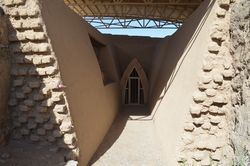
One of the
key elements of medieval urban infrastructure was the underground water supply
system. The total length of the gallery is approximately 50 meters, its width
is 1.5 meters, and its height is 2 meters. Two parallel rows of ceramic pipes
laid through the gallery supplied water to the bathhouse. The diameter of the
connecting pipes is about 20 centimeters.
The external
section of the gallery, which originated from the city’s reservoir, has
collapsed, while the part located closer to the bathhouse remains well
preserved in its original form.
Archaeological
studies have shown that the water supply system operated for a long period of
time, undergoing maintenance and alterations to its layout over the years.
The cultural layers excavated at the site date back
to the period before the 14th century. Most of the ceramic and glass artifacts
found in the construction layers belong to the Karakhanid era (10th–13th
centuries). This evidence indicates that the gallery and the adjoining
bathhouse complex were actively used during that time. After the bathhouse
complex ceased to function, its territory, including the gallery section, was
converted into a cemetery. This phenomenon illustrates the transformational
nature of sacred and public spaces within the medieval urban environment.