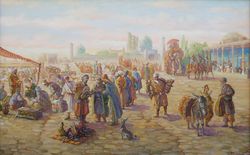
Trade and
craftsmanship held a special place in the development of medieval cities in
Kazakhstan. Located along the Great Silk Road, Otyrar was a major commercial
and cultural hub from the early Middle Ages, serving as a key link between
Central Asia and the East. Craftsmen, farmers, and herders sold their products
in the marketplace, relying on a barter-based trading system — a tradition
that, as archaeological evidence suggests, continued well into the 17th
century.
The trading
arcades were not merely places of exchange, but also important public spaces
that fostered social interaction and strengthened communal interdependence
among the city’s inhabitants. The presence of such structures indicates a
degree of economic stability achieved by the urban population.
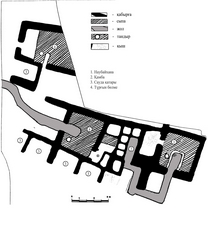
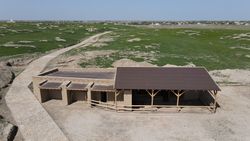
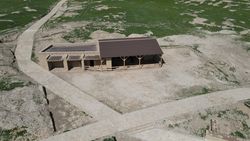
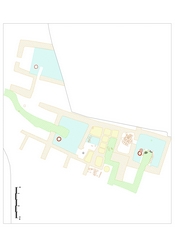
Excavations
carried out at a square located at the junction of the city’s three main gates
revealed a site that functioned as the central marketplace.
Remains of
shops built along the square, as well as a bakery, confirm that this area
served as a trading zone. Within the bakery, archaeologists discovered hand
mills and underground grain storage pits.
Findings indicate that these structures functioned
not only as points of commerce but also as vital components of urban life,
contributing significantly to the development of domestic and social culture.
This underscores Otyrar’s importance as not just a regional, but also an
international center of trade and interaction.