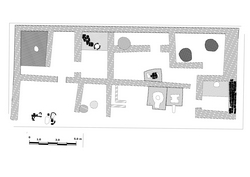
The potter’s
residence and workshop serve as an important source of information for studying
the lifestyle and production methods of the medieval period.
The
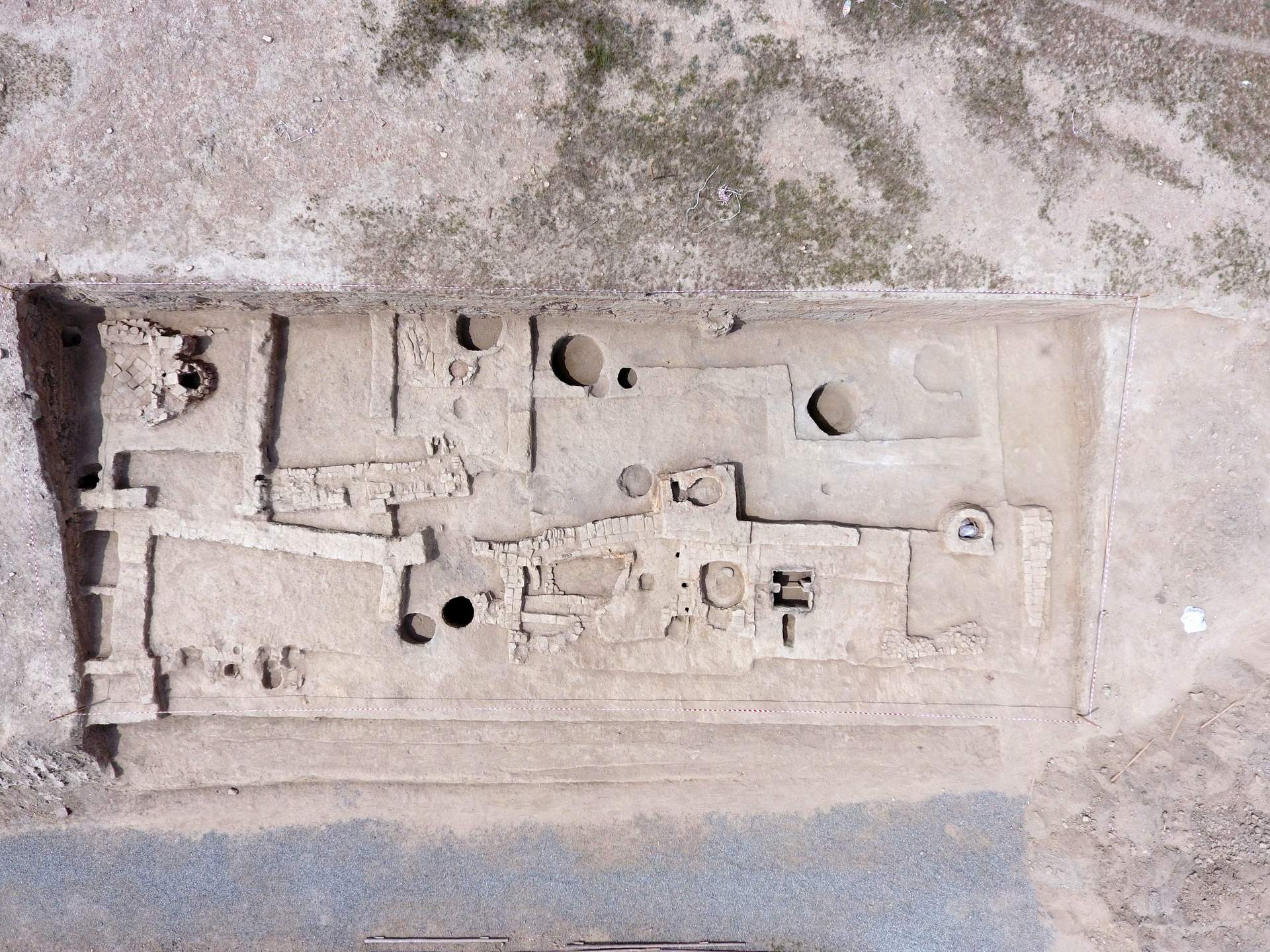
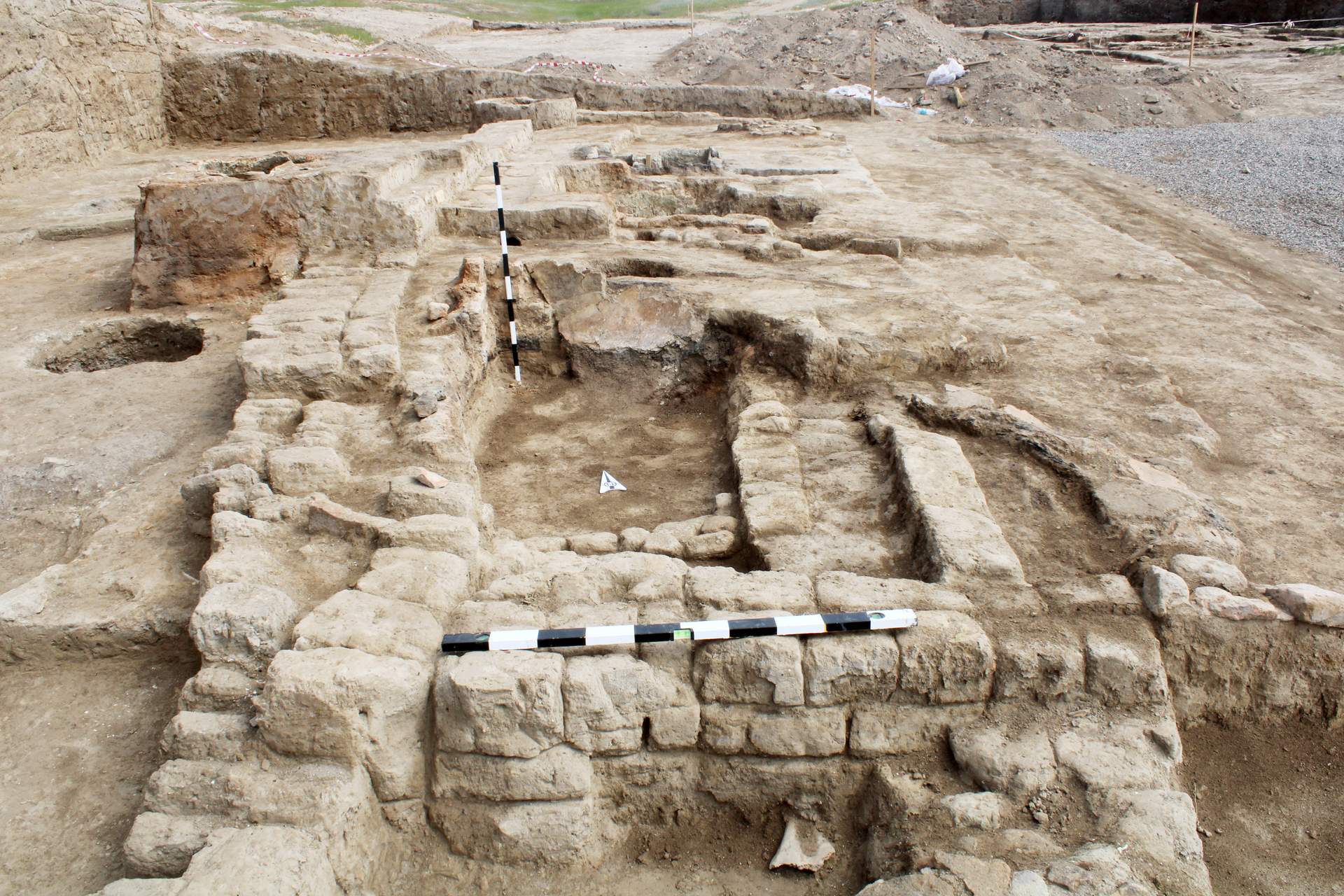
residential complex, built in an enfilade layout, consists of an entrance
corridor (which also served as a storage room), a bedroom, and a dining area.
These rooms are sequentially connected by a passageway, reflecting the
practical household needs and architectural planning of that era.
Based on the
construction features of the adjoining rooms and the artifacts uncovered during
excavations, it has been determined that part of the structure was used for
production purposes. Beneath the canopy in front of the complex were designated
areas for shaping and drying pottery.
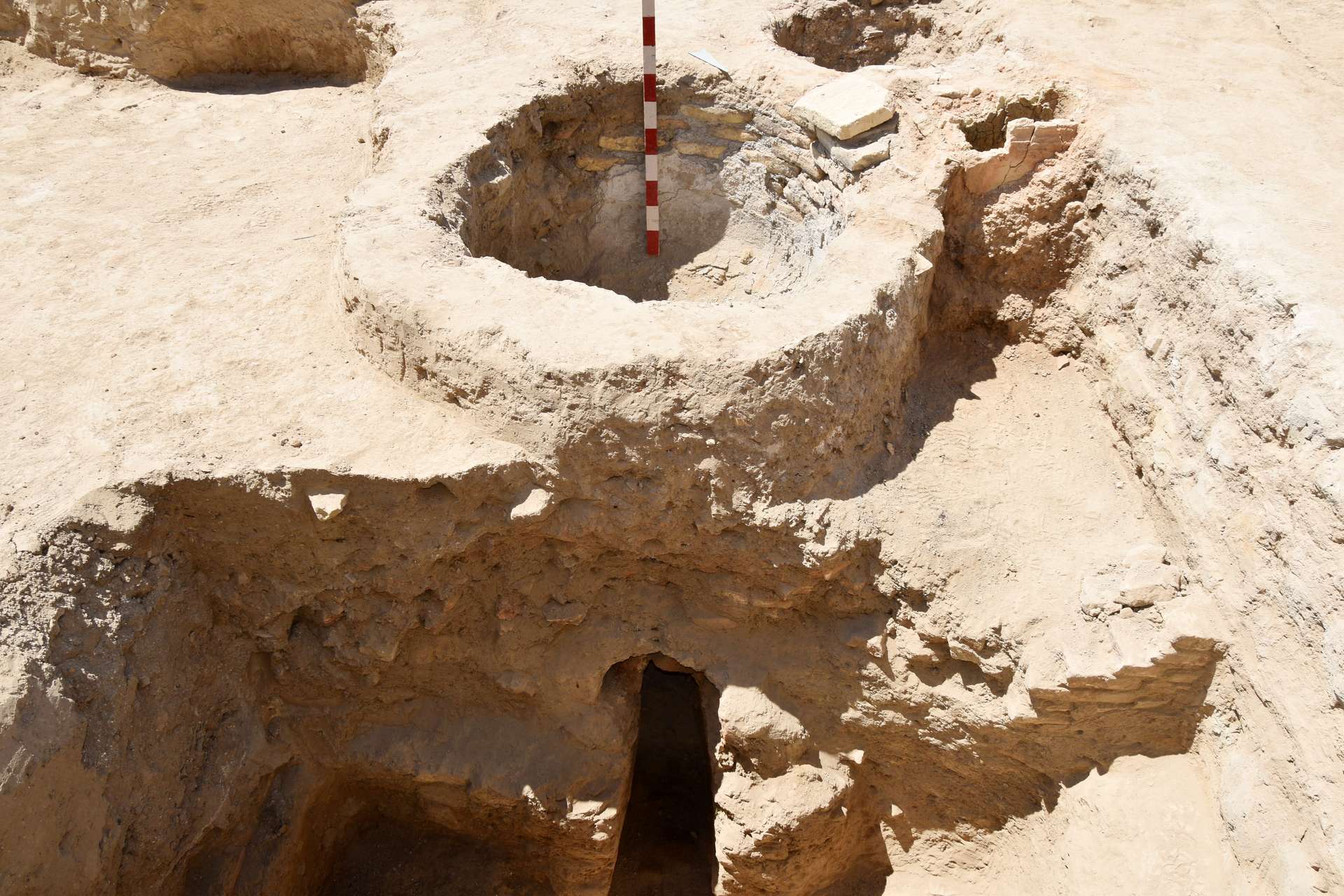
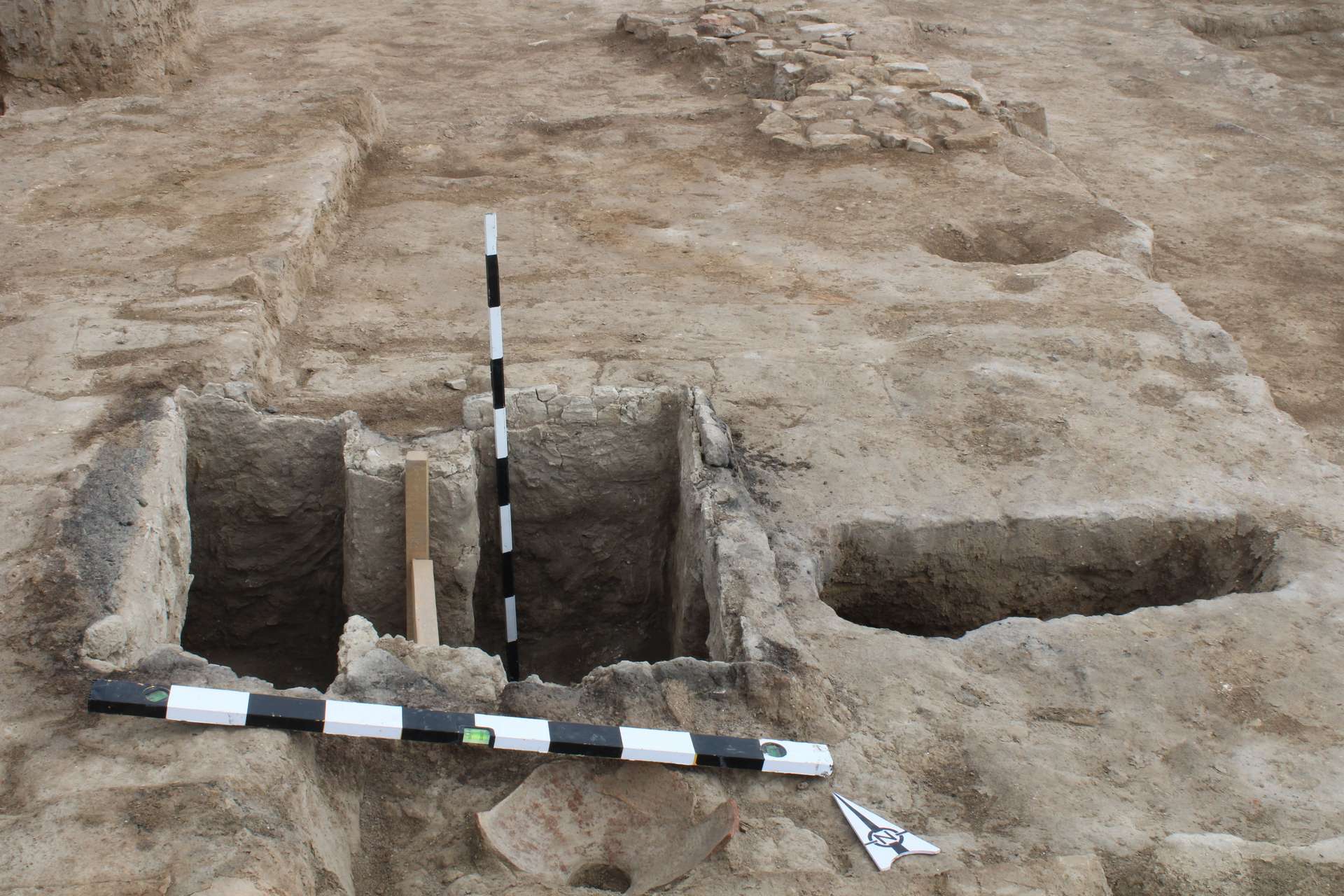
The kilns in
the workshop were two-chambered: the lower chamber was used for firing, while
the upper chamber was for baking the pottery. Two types of kilns were
identified — circular and rectangular — indicating different technological
stages and production requirements in pottery-making.
The complex was in use for a long period during the
15th–16th centuries and provides valuable insights into the daily life and
craftsmanship of that time. The combined layout of the residence and workshop
clearly demonstrates the close relationship between labor and everyday living.