In medieval
cities, not only residential but also public and cultural facilities were
constructed, among which bathhouses played an important role. Archaeological
evidence indicates that from the 9th to the 15th centuries, bathhouse
construction and hygienic culture in Eastern cities, including Otyrar, were
highly developed.
Public
bathhouses in Otyrar, dating from the 9th to 15th centuries, reflect the
development of urban culture during the medieval period and demonstrate that
the population adhered to sanitary and hygienic standards. The architectural
design and engineering solutions of the bathhouses indicate a high standard of
living among the city’s inhabitants.
The
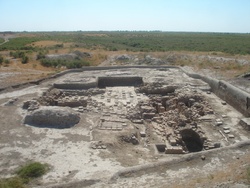
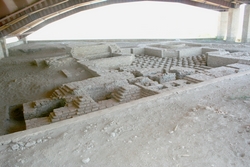
13th–15th century bathhouse complex consists of ten rooms, including a changing
room, a resting room, and a bukhana (steam room), which served the main
functional purposes. In several rooms, the floors were paved with clay tiles
decorated with swastika motifs.
The
bathhouse was heated through the floor. Heat was supplied from a furnace located
in the western part of the building and distributed to all rooms through
channels under the floor, maintaining a stable internal temperature.
Water was
supplied to the bathhouse from the city reservoir through underground pipes,
while wastewater was removed via the sewage system.
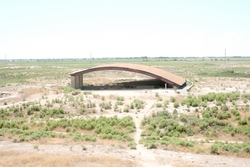
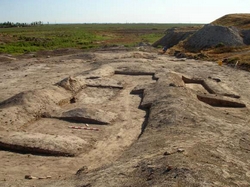
Archaeological excavations in
the Otyrar rabad identified three such public bathhouses.
The first
was located in the northwestern part of the shakhristan, close to the
defensive walls.
The second
was situated beneath the 13th–15th century bathhouse complex described above.