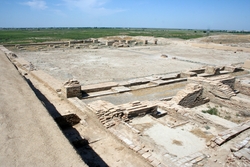
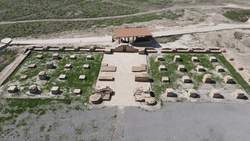
Located in the
southeastern part of Otyrar city, this mosque was built in the 14th century
under the patronage of the renowned conqueror Amir Timur. The Friday Mosque is
regarded as one of the significant examples of medieval Islamic architecture.
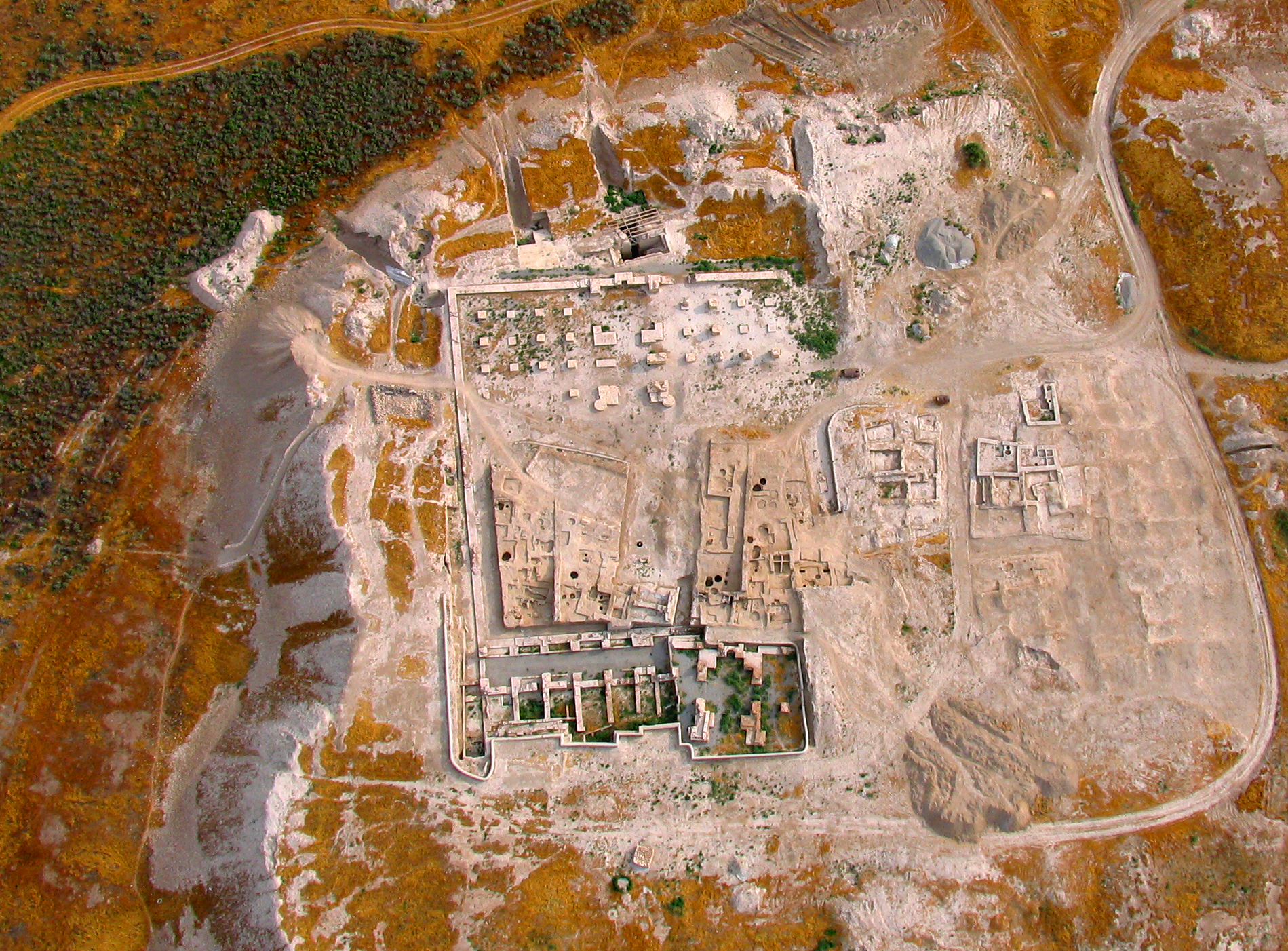
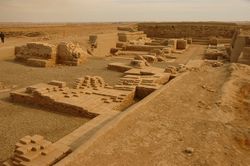
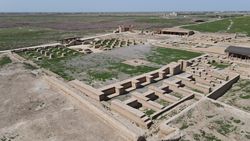
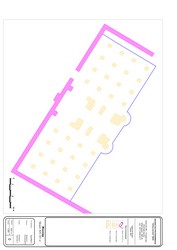
The mosque measures
60 × 22 meters, indicating its grand scale and its important role as a major
religious and public building of its time.
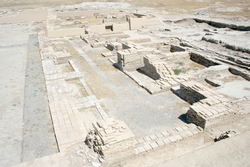
The architectural
design features an entrance portal positioned at the center of the northeast
façade, measuring 2.7 × 1.35 meters. The portal projects outward from the main
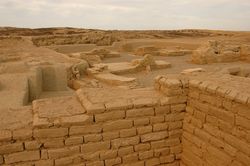
wall line, with a recess about 6 meters deep. The western pylon is preserved to
a height of 1.7 meters, while the eastern one has been lost. At the corners of
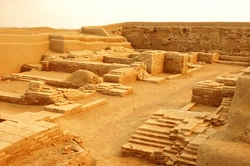
the portal stood towers, each 2 meters in diameter, with spiral staircases
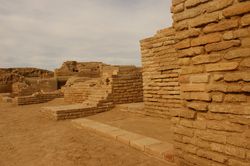
accessed through a 1-meter-wide doorway. Four of the original steps on the
right side of the entrance have survived to the present day.
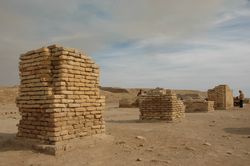
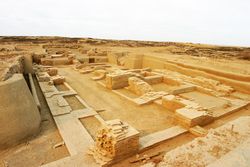
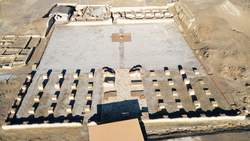
The façade
composition includes four open galleries arranged in three rows, supported by
30 square pillars (1.35 × 1.35 m), spaced 3.7 meters apart.Two halls were identified near the entrance. The roof supports were mostly
dismantled, except for one remaining pillar on the west side of the first hall.
In the main prayer hall, in front of the mihrab, remains of two polygonal
pillars were found, while those on either side of the mihrab were built in the
form of square pilasters.
In the southern
wall, where the mihrab is located, there is a doorway with a high threshold
leading to a street that connected the mosque with nearby residential areas
close to the city citadel. The mosque’s walls are 1.35 meters thick, and the
corners of the main façade are decorated with pilaster-like structures.
The mosque’s
architectural decoration was of exceptional artistic value. Excavations
revealed glazed tiles, square and rectangular majolica panels decorated with
geometric and zoomorphic motifs, and ornamental ceramic lattices (panjaras),
all indicating that the mosque was originally designed as a richly adorned
architectural landmark.
According to
medieval written sources, construction of the mosque was never fully completed.
After Amir Timur’s death, building activities ceased, and local inhabitants
dismantled parts of the brickwork, converting the structure into a residential
space. This greatly altered the monument’s original form and architectural
integrity.
Archaeological studies confirm that the mosque
was initially conceived as a grand and artistically elaborate architectural
complex. Its intricate layout, variety of decorative elements, and integration
with the city’s structure make it a remarkable monument of Otyrar’s medieval
architecture. However, the incomplete construction and later historical
circumstances negatively affected its preservation.