The history of the
Kazakh dwelling originates from the ancient settlements and camps of the tribes
that inhabited the vast lands of Kazakhstan. Archaeological and research findings
show that housing structures began to evolve as early as the Bronze Age.
Of course, it is
impossible to compare the Kazakh dwellings of the 19th century with the
settlements of the ancient tribes that once lived in this region. Changes in
the economy, technological advancement, and social and economic growth
inevitably influenced the development of housing. After the people fully
transitioned to nomadic livestock herding, permanent settlements became rarer
in many parts of Kazakhstan, while portable types of dwellings began to emerge.
The form of the
nomadic house was developed in the Kazakh steppe. By the 15th–16th centuries,
the portable yurt had become the main type of dwelling. The
16th-century Persian writer Ruzbihan Isfahani wrote about Kazakh dwellings: “They are quickly assembled and can be transported by large animals.”
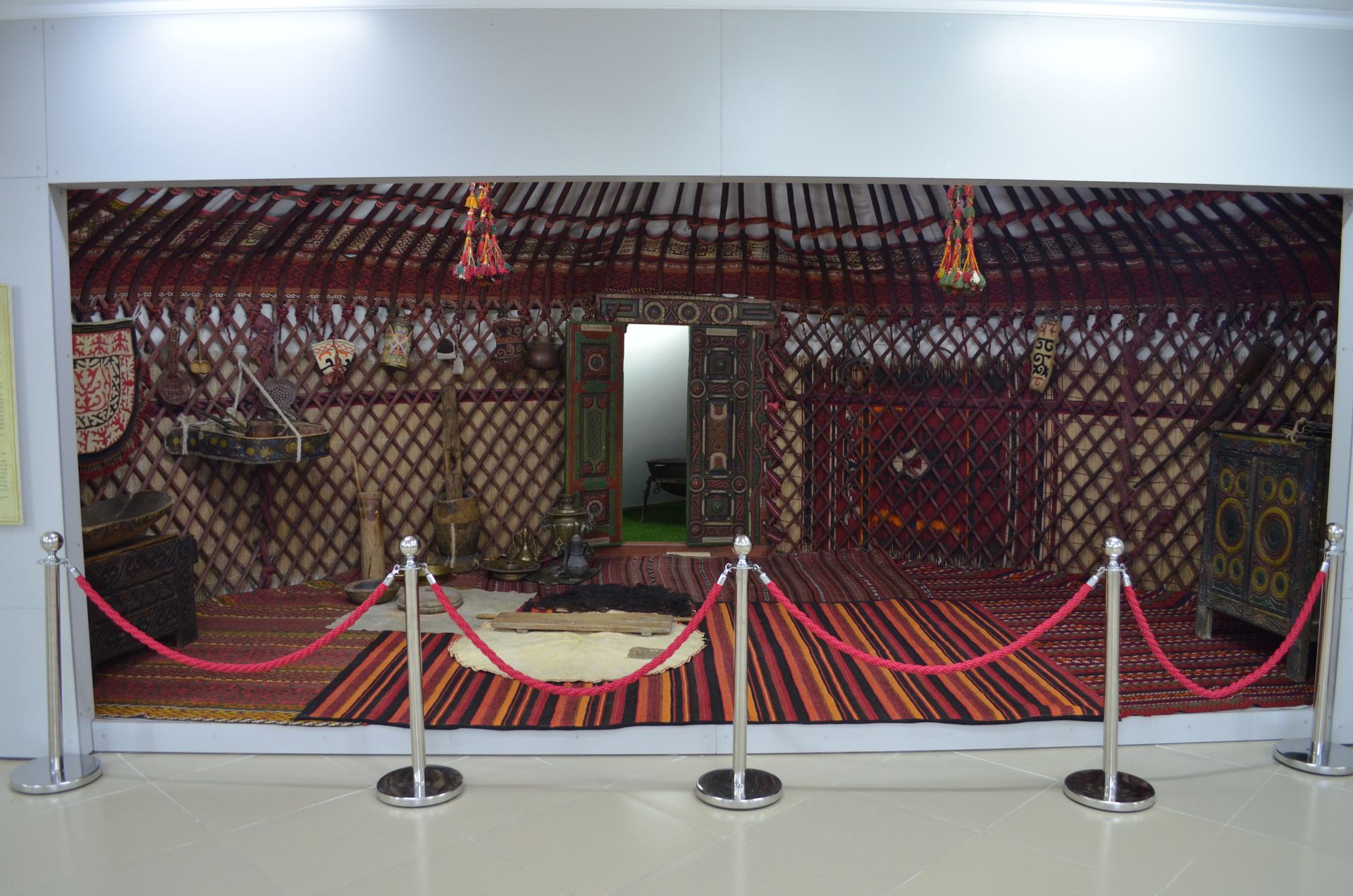
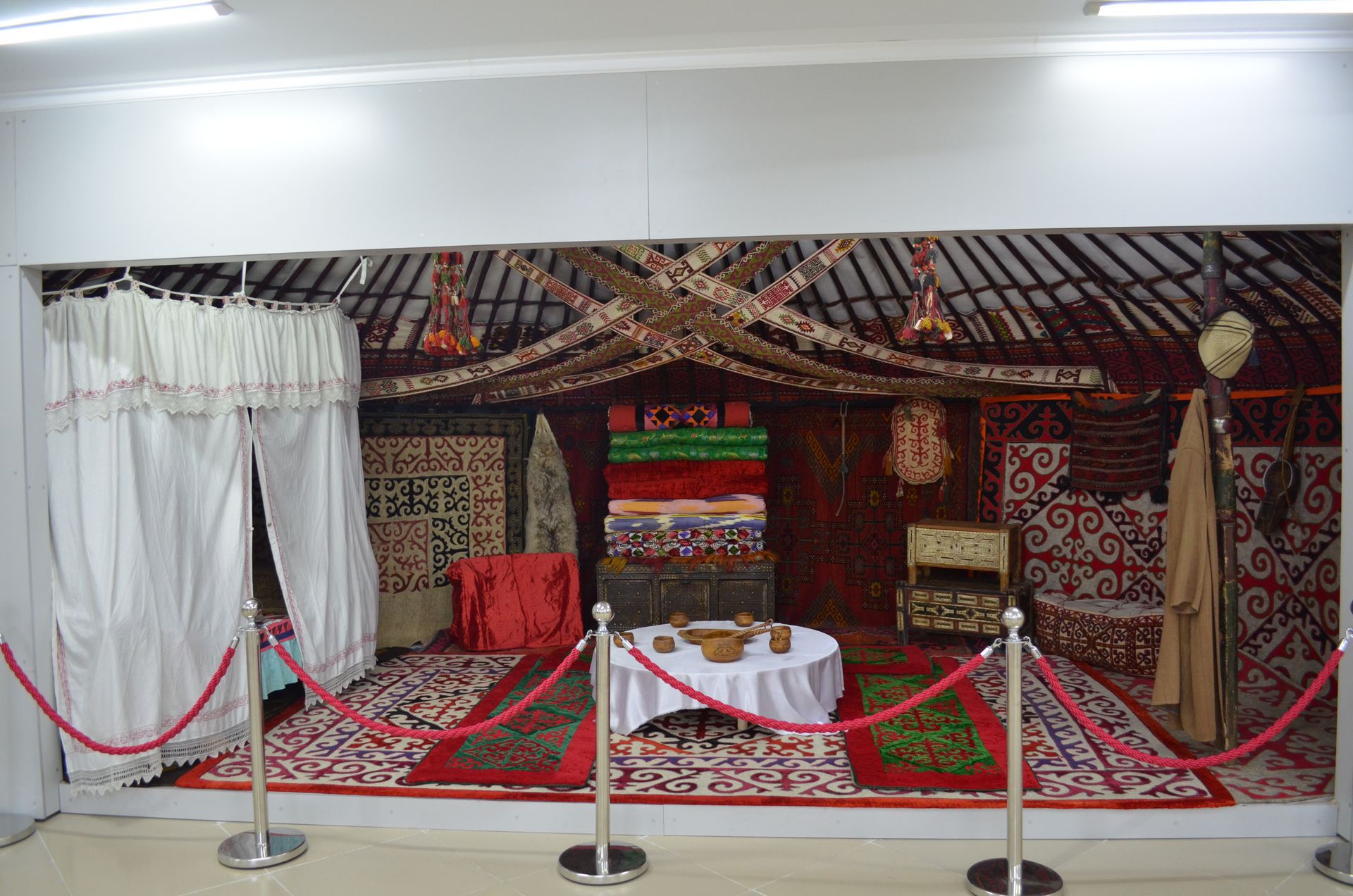
The yurt, adapted
to a nomadic lifestyle, has been the traditional dwelling of nomads since
ancient times. It was widely used among semi-nomadic and sedentary peoples
across the Eurasian steppes. Designed for mobility, the yurt stays cool in the
heat and warm in winter, when its frame is covered with double layers of felt.
Depending on
cultural and practical purposes, yurts were divided into three main types:
1. Summer yurts, used during the
warm season — ak boz uy (“white yurt”).
2. Ceremonial yurts, set up during
celebrations or for hosting honored guests — ak
uy,
ak orda, otau
uy.
3. Campaign yurts, used during
journeys or military expeditions — Abilaysha, zholym uy.
In addition, there were special-purpose yurts used
as kitchens, storerooms, or workshops — kilet uy, as uy, kibit. Yurts ranged in size from small ones with 2–3
sections to large ones of up to 30 kanats (lattice wall sections).