In the 16th
century, the Shahristan area underwent a process of revitalization, with new
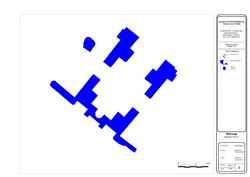
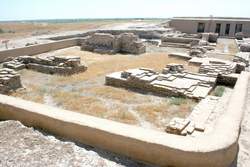
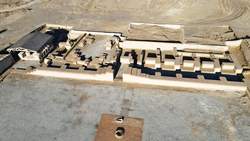
buildings erected on previously vacant plots. One such structure was a mosque
located to the south of the central mound. This architectural monument is
regarded as an example of religious architecture representing the revival
period of medieval urban culture.
Although the
full length of the mosque has not been determined, its width is approximately
15.5 meters. The spatial layout follows a traditional compositional scheme,
consisting of a central hall with a mihrab and adjoining side chambers. This
design facilitated the convenient movement of large congregations.
The main
prayer hall measures 7 × 7 meters. Its proportions are compact and harmonious.
The mihrab and adjacent areas were coated with a thin layer of ganch
(alabaster plaster), a typical interior decorative feature of that era.
The mosque’s
entrance was designed as a monumental portal, a feature commonly found in
Central Asian Islamic architecture. This element emphasized the mosque’s social
and religious significance, distinguishing it from other urban buildings.
The mosque represents a continuation of Islamic
architectural traditions established in the 16th century and played an
important compositional role within the city’s urban structure. Its
construction techniques and decorative elements reflect the stylistic
characteristics of its time.