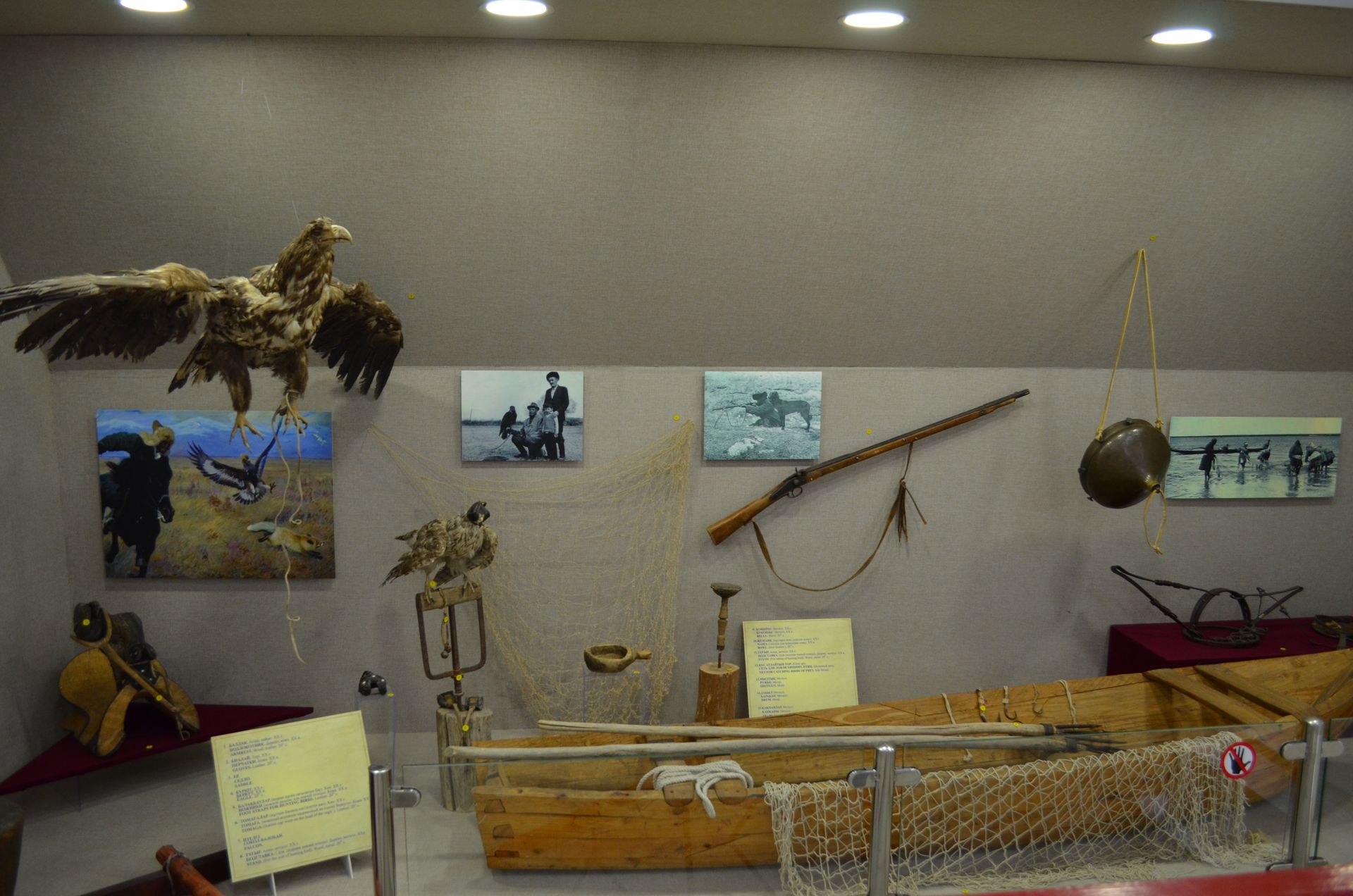
In the nomadic environment, hunting was a
supplementary activity that originated from the most ancient forms of human
existence and eventually developed into a trade. In the traditional
classification of Kazakhs, hunting using weapons and gear was called "anshylyq",
while catching animals with the help of dogs and birds of prey was known as "sayatshylyq".
There were various forms of hunting: with tazy
(a type of sighthound), with birds of prey, winter hunting ("sonar"),
and collective hunting ("salburyn"). The methods were also
diverse: setting traps and snares, driving animals into pits, tracking, driving
them into narrow ravines for subsequent capture, and using nooses, nets, cages,
and other simple devices. Many of these methods are still significant today.
The traditions of hunting with tazy and falconry continue to live on as part of
the national heritage.
Fishing is one of the oldest forms of human economic
activity. In its early stages, it was primitive: people would collect fish
washed ashore by waves or left in puddles after the tide went out. Later, they
began to use specialized tools: spears, forks, harpoons, and hooks made from
animal bones, stone, and other natural materials. Nets, barriers, and baskets
were also used for catching fish.
The population that lived along the Syr Darya river
primarily used forks, nets, large hooks, and regular fishing rods.