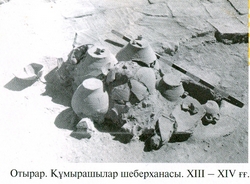
Pottery
workshops in Otyrar during the 13th–14th centuries consisted of complex
production and residential structures. In these workshops, clay processing,
pottery shaping, firing, and drying were carried out in specially equipped
spaces. Research has shown that Otyrar potters were technologically advanced
and produced high-quality artistic ceramics.
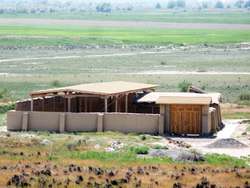
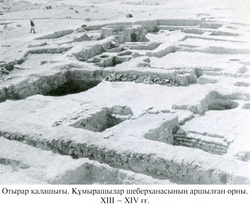
The studied
area of the ceramic workshops, located in the city center and in the rabad,
covers approximately 2 hectares. Excavations revealed two construction layers:
the lower layer dates to the 13th century, and the upper layer to the first
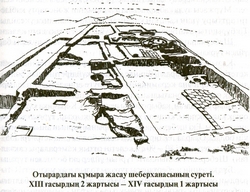
half of the 14th century. Six workshops were excavated, one of which was fully
studied, providing detailed information on its layout. The total area of this
workshop is 157 m², of which 89 m² were used for production, and the remaining
space served as a residential area.
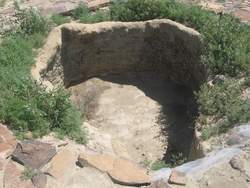
The
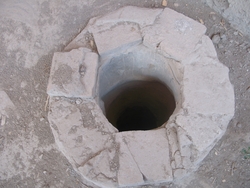
production area consists of two rooms. The first room contained a wooden
platform, a brick storage kiln, a well, water containers, and a designated area
for clay processing. The second room was partially open and partially enclosed.
It housed a clay storage box, a potter’s wheel, a hand-washing station (tashnau),
and square molds.
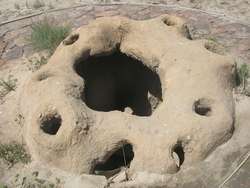
In the
northeast corner of the room, a two-chamber kiln was installed. The lower
spherical chamber, 1.6 m in diameter and 1.6 m deep, served as the fuel
combustion chamber. The upper chamber was used for firing the prepared items at
high temperatures. The kiln’s chimney was arched and built of brick.
The style and decorative quality of the artifacts
found during the excavation indicate that Otyrar potters had advanced technical
skills and a high mastery of the ceramic craft.